Qualify enquiries faster: a five-question intake form with AI summaries
Not every enquiry deserves the same time. Ask the same five questions at the start, and let AI turn the answers into a short summary and a suggested next step.
On this page
A small team cannot give every enquiry an hour. Some customers are ready to buy this week. Some are only comparing prices. Some need something you do not sell. Qualifying means finding out quickly which is which, so that the ready customers get your attention first.
Step 1: Choose your five questions
Pick the questions whose answers change what you do next. A set that works for most businesses:
- What do you need? The product or service, in the customer's words.
- How much, or how big? Quantity, size, number of people or budget range.
- By when? This week, this month, or just exploring.
- Where? City or delivery location.
- How should we contact you? Phone, WhatsApp or email, and the best time.
Keep it to five. Every extra question loses people.
Step 2: Ask them the same way every time
Use whatever your customers already use:
- WhatsApp: a saved quick reply that asks the five questions in one friendly message.
- Website or social media: a short form, for example Google Forms, that fills a spreadsheet.
- Phone: a one-page script, with the person on the phone typing the answers into the sheet.
The channel matters less than asking the same questions every time.
Step 3: Let AI summarise and suggest
Copy the answers (without the phone number or other personal details) into your AI assistant with this prompt:
You help a [type of business] sort new enquiries. Here are a customer's answers to our five questions: [paste]. Write: (1) a two-line summary; (2) which group this enquiry belongs to: A = ready to buy soon and a good fit, B = interested but not ready or missing information, C = not a fit for us; (3) one suggested next step; (4) one question we should ask next. Our business: [what you sell, minimum order, areas served]. Do not guess anything that is not in the answers.
Example
A made-up printing business, used only to show the idea.
Answers: "Wedding cards, 300 pieces, needed in 12 days, Lucknow, WhatsApp is fine."
AI summary: "Wedding card order of 300 pieces, delivery needed within 12 days in Lucknow. Group A: clear need, clear quantity, near deadline. Next step: send two design options and the price today. Ask: do they have a design in mind or need us to design it?"
The owner agrees and replies within the hour. An enquiry that says "just checking prices, maybe next year" goes to group B and gets a price list and one follow-up next month.
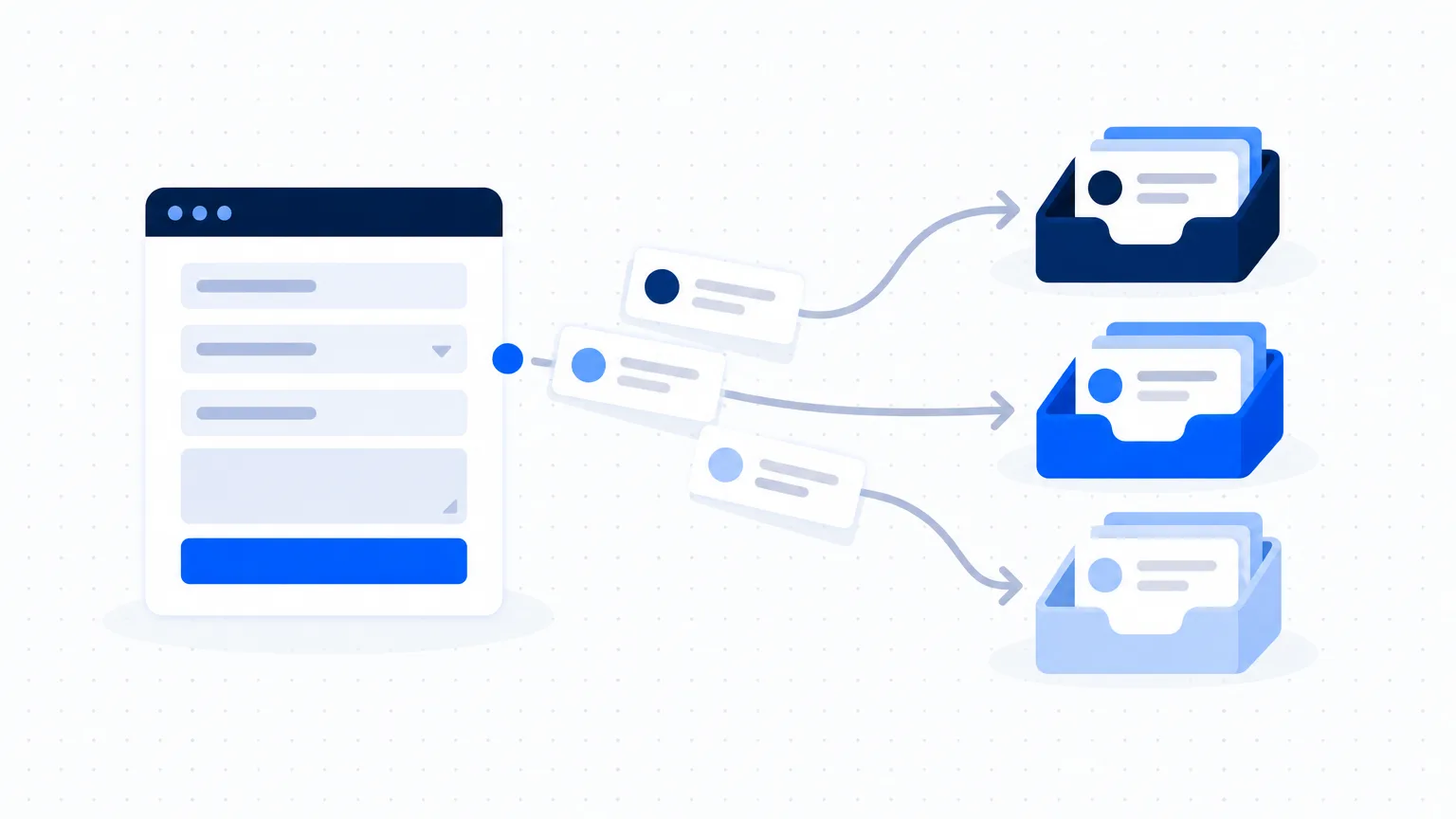
Step 4: Decide what each group gets
| Group | Who | What they get |
|---|---|---|
| A | Ready and a good fit | A reply the same day and a call |
| B | Interested, not ready | A helpful message now, a follow-up on a fixed date |
| C | Not a fit | A polite reply and, if you can, a pointer to someone who can help |
Group C deserves a polite answer too. People remember how they were treated, and they talk.
Step 5: Review the groups once a month
Look at ten enquiries you marked A. Did they buy? If many did not, your questions or your judgment need adjusting. Also look at a few marked B and C to see whether you were too quick to set them aside.
Keep a person in charge
- AI suggests the group. A person confirms it.
- Never reject a customer automatically.
- If an answer is unclear, ask the customer instead of guessing.
Mistakes to avoid
- Asking for too much at the start. Do not ask for GST numbers, full addresses or documents in the first message.
- Treating the group as final. A "B" who replies quickly has become an "A".
- Pasting names and phone numbers into the AI. The summary does not need them.
Next step
Put the summary and the group into your enquiry sheet, and let the follow-up days do the rest: A simple AI-assisted follow-up system for sales leads.